

Author: Dr. Sofia Sirage
The BARF diet, which has become increasingly popular among pet owners, has associated risks. Meet them in this article.
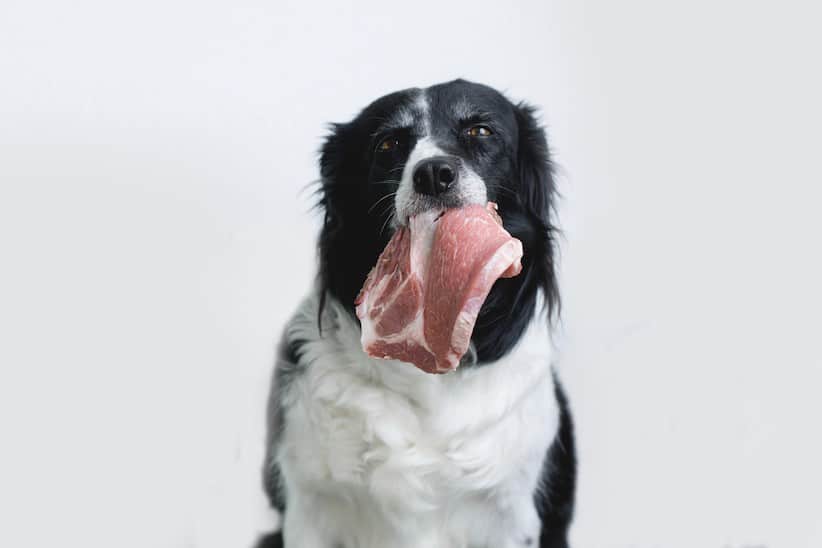
BARF (Billogically Acompute Raw Food) or RMBD (Raw Meat Based Diets).
What does it consist of? These diets consist of raw meat, organs (rins, liver, etc.), bones (integrated or ground) and cartilage, complementing the meal with raw vegetables and eggs.
? Main objective? Their main objective is to imitate what the dog would eat in nature, and it is therefore considered a natural option.
But…
WARNING: We must bear in mind that our pets are no longer wild animals, they have undergone a process of domestication of thousands of years.
What your animal eats is closely linked to your health, so we must ensure that the food we provide you is the one that will bring the most benefits to your health.

Therefore, we must take into account the main factors of this diet:
Diet no balanced
Several studies conducted with diets prepared at home or commercially acquired report multiple nutritional deficiencies. The main ones are lack of calcium, phosphorus (which can lead to bone fractures and dental problems), potassium and zinc.
It is very important to bear in mind that the negative effect of nutrient deficiency generally appears in the long term.
Risk of infections
Studies with scientific evidence (*1) demonstrate that this raw meat diet can transmit parasites and bacteria (salmonella, listeria, e.coli…) responsible for various diseases. Some of them can even be transmitted from animals to humans, which is considered a zoonosis. pet owners may become ill by contact with their animal, food, utensils or even contaminated feces.
The latest studies show that animals can even be infected by antibiotic-resistant bacteria. Which increases the danger to public health. Therefore, it is essential to be attentive to risks inherent to these diets.
Risk of digestive problems
Bone ingestion may cause tooth fractures during chewing and obstructions at the level of the gastro-intestinal tract. In more severe cases, internal perforations may occur, which may lead to the death of the animal.
Before adopting a type of natural feeding, Consult a veterinarian specializing in nutrition, so that he can help to outline a food plan appropriate to the needs of his faithful companion.

Final considerations:
Due to the potential risk of infections, raw feeding is not recommended for animals who are receiving chemotherapy or have diseases affecting the immune system.
pet owners with compromised immune system or who contact people at higher risk of getting infections (small children, the elderly, immunocompromised patients) should be aware of the increased risk of infection that this feeding may bring. Therefore the use of BARF diets is not recommended in these cases.
Nor is it at all suitable for growing young animals. A proportion of incorrect calcium and phosphorus can cause bone deformation and growth problems. Not indicated in cases of hepatic and/or renal impairment.
Animals with this type of feeding must carry out periodic medical-veterinary analyses and checks to ensure that there is no deficiency that needs to be addressed.

(*1) “Zoonotic bacteria and parasites found in raw meat-based diets for cats and dogs”